How to read mg and % on CBD oil and compare products
A few simple sums to set an oil, a box of capsules and a cream side by side.
Two numbers, two questions
On a CBD oil you usually see a percentage and a number of milligrams. The percentage answers “how concentrated is it”, the milligrams answer “how much CBD is in the whole bottle”. Capsules usually show only the milligrams in one capsule and the number of pieces in the box, and creams show the milligrams in the whole jar.
Many makers calculate the percentage by volume: 10 % means 100 mg of CBD in every millilitre. Others calculate it by weight, and then the milligrams come out slightly lower, because oil is lighter than water. That is why, when you compare, you go by the milligrams printed on the label, not only by the percentage.
The sums you can do in your head
They all start from two numbers on the label: the milligrams and the volume or the number of pieces. All you need is multiplication and division.
- CBD in the bottle: percentage × 10 × millilitres. 10 % in 30 ml = 10 × 10 × 30 = 3000 mg.
- CBD in one millilitre: milligrams in the bottle ÷ millilitres. 3000 mg ÷ 30 ml = 100 mg/ml.
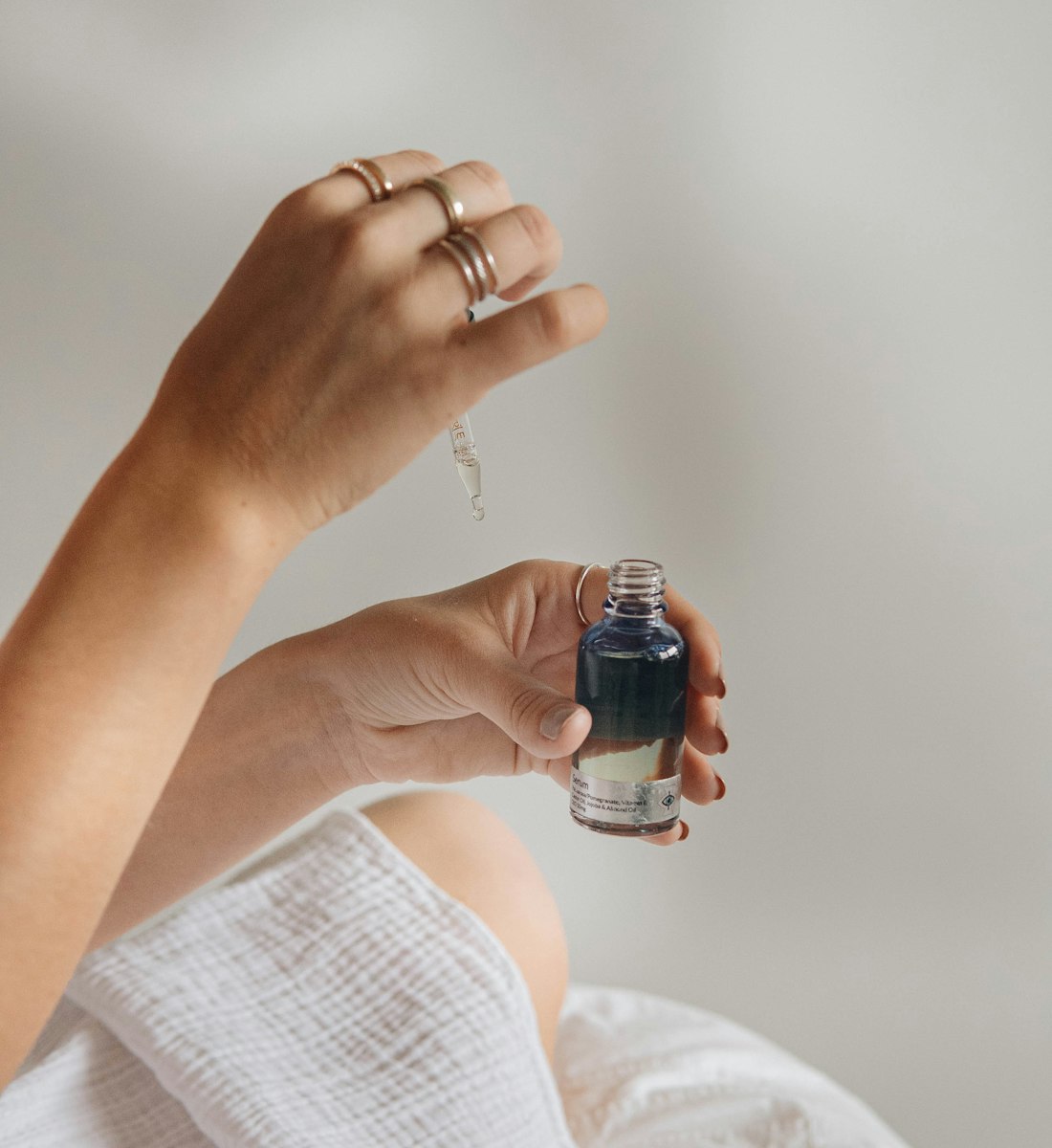
- Drops in the bottle: millilitres × 20, because a drop is about 0.05 ml. A 10 ml bottle holds about 200 drops.
- CBD in one drop: mg per ml ÷ 20. 100 mg/ml ÷ 20 = 5 mg. The figure is a guide; droppers differ.
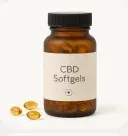
- CBD in a box of capsules: mg per capsule × number of capsules. 30 × 10 mg = 300 mg.
- Cost per milligram: price ÷ milligrams in the pack — the only fair way to compare two different packs.
Worked examples
The table sets common packs side by side and brings them to the same units. Look at rows 3 and 4: the 30 ml oil at 10 % and the 10 ml oil at 30 % both hold 3000 mg, but the second is three times as concentrated, so one drop of it holds three times as much CBD.
Likewise, two oils with the same percentage have the same amount of CBD in a millilitre, however big the bottle: the larger one simply holds more in total.
| Product | On the label | CBD in the pack | CBD per unit | In one drop (≈ 0.05 ml) |
|---|---|---|---|---|
| Oil, 10 ml | 5 % | 500 mg | 50 mg/ml | 2.5 mg |
| Oil, 10 ml | 10 % | 1000 mg | 100 mg/ml | 5 mg |
| Oil, 30 ml | 10 % | 3000 mg | 100 mg/ml | 5 mg |
| Oil, 10 ml | 30 % | 3000 mg | 300 mg/ml | 15 mg |
| Capsules, 30 pcs | 10 mg/capsule | 300 mg | 10 mg/capsule | — |
| Capsules, 30 pcs | 25 mg/capsule | 750 mg | 25 mg/capsule | — |
| Cream, 50 ml | 500 mg | 500 mg | 10 mg/ml | — |
How to set two products side by side
Compare like with like: mg per ml with mg per ml, mg per pack with mg per pack. An oil's percentage and a capsule's milligrams cannot be compared directly. For example, a 10 ml oil at 10 % holds 1000 mg, and a box of 30 capsules of 25 mg each holds 750 mg: the oil contains more CBD in total, even though “25 mg” sounds like more than “10 %”.
The figures on the label are the maker's promise; the batch report shows what was measured. A small deviation, usually ±10 %, is normal for a natural extract (how to read the report). If the difference is large, the product does not match its label, and the seller's legal guarantee of conformity applies (guarantee).
What EFSA said in 2026, and what it did not
In February 2026 the European Food Safety Authority (EFSA) set a provisional safe intake level for CBD as a novel food: 0.0275 mg per kilogram of body weight per day, or about 2 mg a day for a 70 kg adult. The figure covers only food supplements with CBD at least 98 % pure, without nanoparticles. For people under 25, for pregnant or breastfeeding women and for those taking medicines, EFSA said safety cannot be established.
It is a scientific assessment within the authorisation procedure, not an intake recommendation and not an authorisation: the decision lies with the European Commission and the member states. According to Belgium's FPS Public Health (page updated on 1 September 2026), no CBD ingredient has been authorised as a novel food to date. The figure does not apply to cosmetics.
EFSA's figure is not a dose. The way to use a product is the one on its label, and questions about amounts go to a doctor or pharmacist.
When to ask a doctor or pharmacist
A shop has no way of knowing what suits you, which is why we publish no usage schedules and recommend no amounts. CBD products are sold only to people aged 18 and over and are kept out of children's reach.
Ask a doctor or pharmacist before using a CBD product if one of the situations below applies to you.
- You are pregnant, breastfeeding or planning a pregnancy.
- You take medicines — a group for which EFSA could not establish safety.
- You are under 25 — the age group for which EFSA could not establish safety.